
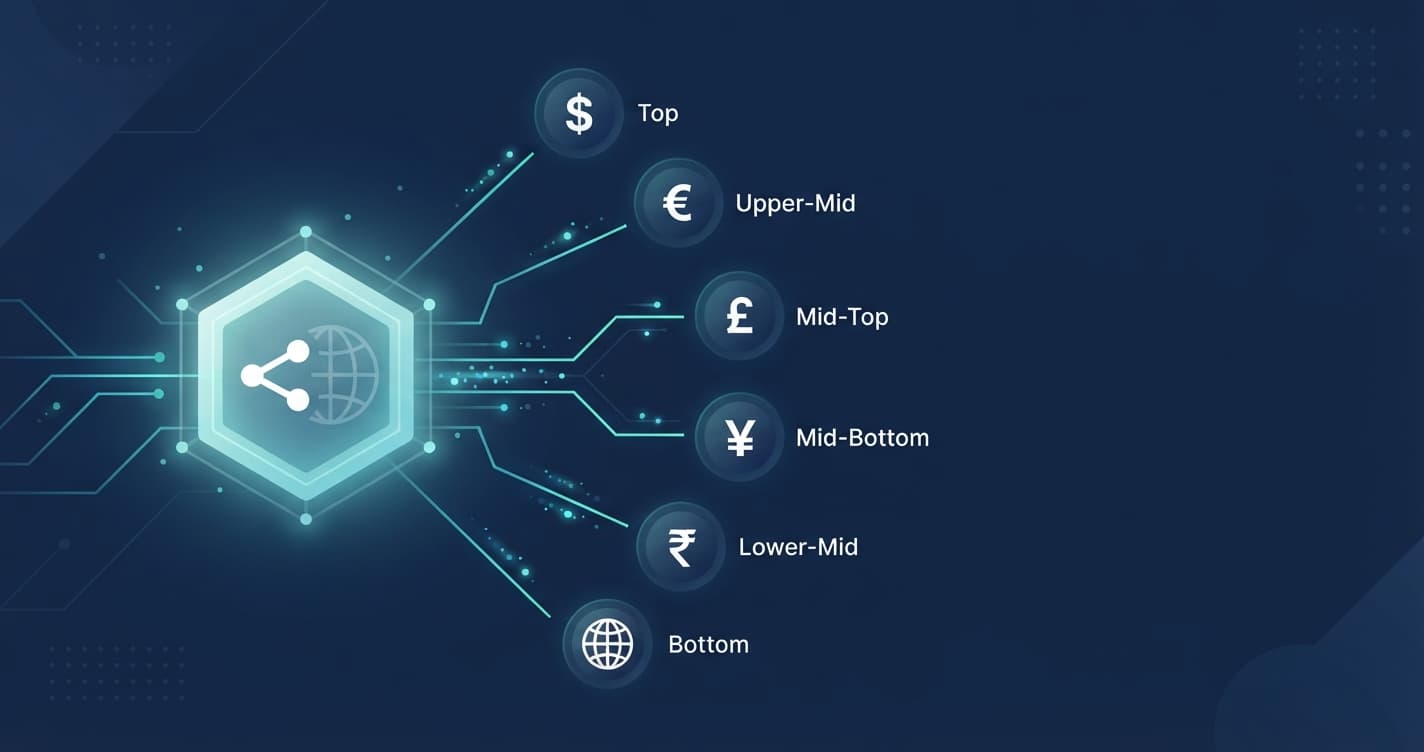
One Integration, Multiple Markets: How Global Payment Infrastructure Should Work
Global businesses often run on a single technology stack while their financial infrastructure remains fragmented market by market.
A US account sits with one provider. Local collections in another market require a different setup. Payment methods change by geography. Reconciliation happens across multiple systems.
The business is global.
The infrastructure underneath it often is not.
In Week 1, we explored the hidden access tax this creates: the time, operational complexity and opportunity cost businesses absorb simply to connect to financial infrastructure that already exists.
The next question is what the alternative should look like.
For global payment infrastructure to actually scale, adding a new market should not mean adding an entirely new financial stack.
Local access on the front end. Unified infrastructure on the back end.
Global Businesses Still Operate on Local Financial Systems
There is no single global payment rail.
The US has ACH and Fedwire. Europe has SEPA and SEPA Instant. The UK has Faster Payments. Brazil has Pix. Other markets have their own domestic banking infrastructure and payment methods.
That local nature of financial infrastructure is not the problem.
Customers want to pay using accounts, currencies and payment methods they recognize. Local access makes that possible.
The challenge begins when the business itself has to independently manage the infrastructure behind every market.
Separate banking relationships, payment providers, integrations and operational processes may work individually. But as they multiply, the result is fragmentation.
Global payment infrastructure should not try to make every market identical.
It should make accessing different markets consistent.
One Integration Should Unlock Multiple Markets
Most modern technology infrastructure is designed around abstraction.
Companies do not want to rebuild their core architecture every time they enter another country. They want a common layer capable of handling the differences underneath.
Payments should work the same way.
Instead of integrating independently with every account provider or local payment method, businesses should be able to connect once and use that connection as their access point to supported financial infrastructure across markets.
That is the model behind RidgeX.
Through one integration, businesses can access Global Accounts, virtual account capabilities and local payment rails across supported markets.
The underlying financial systems remain local.
The integration does not.
That changes the expansion equation from:
New market = new financial stack
to:
New market = new access through the existing stack
For engineering teams, that means less duplicated integration work.
For finance and operations teams, it means fewer disconnected systems to manage.
Global Accounts: Local Access, One Infrastructure Layer
Accounts are one of the clearest examples.
An international business may need different account capabilities to collect and move funds across the markets where it operates.
Traditionally, each additional account can introduce another relationship and another operational environment.
Global Accounts change the model.
RidgeX brings US and international account access into one infrastructure layer, with local virtual account capabilities available across supported markets.
The value is not simply having more account numbers.
It is having those accounts work as part of the same infrastructure.
A customer can interact with local account details and payment methods while the business manages that activity through a more unified operating model.
The account can be local. The architecture supporting it can remain global.
Let Customers Pay Like Locals
Account access is only part of the equation.
How customers actually move money matters too.
A customer generally does not care how sophisticated the infrastructure behind a global company is. They care whether they can pay using a method that makes sense in their market.
That is why local payment rails matter.
Through RidgeX, supported local rails and payment methods can be accessed through the same API rather than requiring a completely separate infrastructure stack for each market.
The customer gets a more local payment experience.
The business gets a more consistent infrastructure layer.
The experience can be local without the infrastructure becoming fragmented.
Reconciliation Is Infrastructure Too
The complexity of global payments does not end when money moves.
Teams still need to know who paid, where the payment arrived, which account it belongs to and how it connects to internal reporting.
When every market uses a different provider, reconciliation can become another source of fragmentation.
Multiple dashboards. Different references. Different reporting formats. Different workflows.
At small scale, teams can manage that manually.
At global scale, it becomes infrastructure debt.
RidgeX's Global Accounts model includes auto-reconciliation across virtual accounts, bringing another part of the payment lifecycle into the same infrastructure layer.
Because global payment infrastructure should not simply make money movement possible.
It should make that money movement manageable.
Access Has to Scale With Control
As businesses expand, another layer has to scale with them: compliance.
More markets can mean more customers, more transactions and more complexity.
The answer is not to remove compliance from the process. It is to make sure the appropriate controls remain part of the infrastructure as access expands.
RidgeX positions compliance as part of its infrastructure, including KYC, AML and sanctions screening.
The principle is simple:
Access and control should scale together.
Global infrastructure is not just about connecting more markets. It is about doing so within an operating framework designed to support that expansion.
The Complexity Should Live Underneath the Integration
None of this makes global finance itself simple.
Different markets still have different currencies, payment rails, financial institutions, regulatory requirements and operating environments.
That complexity is real.
The question is how much of it the business needs to manage directly.
In a fragmented model, each market adds another piece to the company's own financial architecture.
A global infrastructure layer changes where that complexity lives.
Accounts, local rails, payment partners, compliance controls and reconciliation can remain sophisticated underneath.
But the business building on top should interact with them through a consistent layer.
That is the point of abstraction.
Not eliminating local complexity.
Making it easier to operate across it.
From Global Coverage to Global Infrastructure
There is an important difference between supporting multiple countries and having genuinely global infrastructure.
Coverage is a list of markets.
Infrastructure is the architecture that allows a business to operate across those markets without continually rebuilding its financial stack.
That is why the value of global payment infrastructure is not simply the number of accounts, rails or currencies it connects to.
The value comes from how those components work together.
Customers can interact locally.
Businesses can access multiple markets.
Finance can operate from a more unified environment.
Engineering can maintain one integration rather than an expanding collection of disconnected payment stacks.
And the controls supporting that infrastructure can scale alongside the access it provides.
One integration. Multiple markets. Local access.
The financial infrastructure underneath can remain local and complex.
For the business using it, it should feel like one system.
Ready to Simplify Your Global Payment Stack?
Talk to RidgeX to see how one integration can give your business access to Global Accounts, virtual accounts and local payment infrastructure across supported markets - without rebuilding your financial stack every time you expand.
ridgex.io